
About
Every workshop opens with a small ritual. An anthropologist would call it a rite of passage; most people call it an icebreaker. Franka has never liked them. Rebecca, who was leading the session, noticed within minutes and did what any good teacher does with a reluctant participant: she called on her. Then she called on her again.
By the break, they were talking. They haven’t really stopped since.
The conversation wandered the way good conversations do. Rebecca, who lives in New Orleans, talked about patina: the layers of paint, water lines and repairs a city wears on its surfaces, which often tell you more about its history than any plaque. Franka, who grew up in East Berlin, talked about names: how streets, squares and schools there were named and renamed, and what a city chooses to remember out loud or quietly let go. One reads the walls, the other reads the street signs. Both were asking the same question: how does the past live on in the places we share?
Their backgrounds meet at that question. Rebecca has spent her career in K–12 schools as a teacher, coach and leader, and studied the design of the spaces where learning happens. Franka is a cultural anthropologist who studies how institutions shape the people inside them. One knows how a classroom works on a Tuesday morning. The other asks why it works that way at all.
studio liminal grew out of that conversation, and out of a shared wish to build a piazza: a place where people can come together to untangle the wonderful messiness of being human.
Franka still doesn’t like icebreakers. Rebecca still calls on her.

Franka Neukomm
CO-FOUNDER AND ACADEMIC DIRECTOR
Franka Neukomm is a cultural anthropologist whose work examines how violence and exclusion persist in institutions, memory, and everyday life. She holds master's degrees in African Studies and Anthropology and pursued doctoral studies in anthropology at the University of California, Riverside, where she advanced to candidacy. Her research has focused on colonialism and the Holocaust in Germany, including qualitative research on the country's long silence about the colonial genocide of the Herero and Nama, what the anthropologist Ann Laura Stoler calls “colonial aphasia.” Her broader interests include systems of oppression and the nation-state. Her work has taken her across three continents, from fieldwork in South Africa to Berlin and California. Most recently, she was Associate Director of Adult Learning at the Museum of Tolerance in Los Angeles, where she built professional learning programs for educators. She approaches her work through the rhizome: the conviction that harm and repair are connected, and that change can begin at many points.
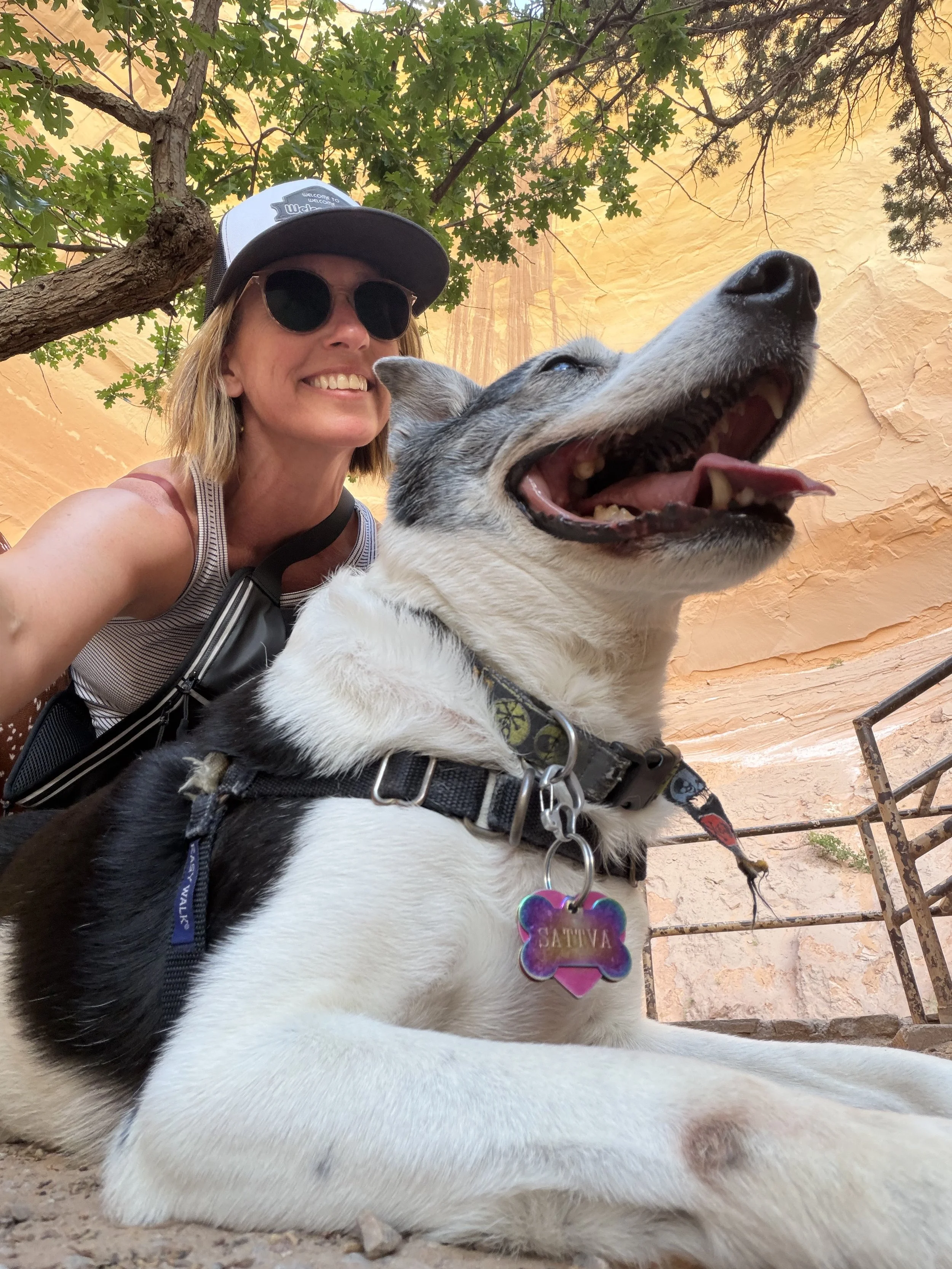
Rebecca Keel
CO-FOUNDER AND director of practice
Rebecca Keel is an educator and learning designer whose work examines how difficult history lives on in institutions, in the narratives people inherit, and in the rooms where they learn. Trained in both educational leadership (MSEd, Baruch College) and interior architecture (MS, Pratt Institute), she studies how space and pedagogy act on each other. With Education Design International, she facilitated stakeholder conversations in the early design phase of schools in Morocco, Ecuador, and Memphis, making board members, educators, staff, students, and families part of the design itself. She also authored the spatial and pedagogical framework for an immersive learning environment at a Holocaust museum. A former New York City teacher and founding staff member of a public high school, she has spent three decades guiding adults through hard, polarizing material. She was one of fifteen facilitators selected nationally to train U.S. law enforcement, reaching more than 2,000 professionals, and she took the Willesden Project into 33 school systems across the U.S. and Canada with USC Shoah Foundation. Most recently, as Interim Director of Adult Learning at the Museum of Tolerance in Los Angeles, she created the vision and voice for its law enforcement and educator programs and redesigned three core POST-approved courses. Drawing on Buddhist contemplative traditions, she designs for the pause between what we feel and what we do: the breath in which an inherited narrative loosens its hold, and imagination can find the next possible space.